
I N S P E C T I O N

About Our Company 
- Home
- /
- About us
Welcome To Our Company
At BRIMBERG Inspection Limited, we transcend mere corporate identity; we embody a collective of devoted professionals. Our mission is to foster a safer, more sustainable world, meticulously adhering to the most rigorous industry standards and regulations.
We extend our heartfelt welcome to you and express our gratitude for your interest in delving deeper into our story and the remarkable services we provide. Established in 2024, BRIMBERG Inspection Limited brings forth not only a wealth of experience but also a commitment to innovation and excellence. Our dedicated team offers fresh perspectives, innovative solutions, and an unwavering passion to support your organization in flourishing while ensuring compliance with regulations, guidelines, and industry standards.
Request a Callback

Our Mission
Our mission is to empower organizations to attain excellence in compliance by providing expert consultancy services, innovative solutions, and steadfast support. Through our efforts, we aim to foster a future characterized by enhanced safety, sustainability, and prosperity.

Our company vision.
1. Our vision entails pioneering the forefront of inspection, innovation, and excellence.
2. We aspire to establish ourselves as the global benchmark within the industry, championing the creation of safe, sustainable, and responsible workplaces. We are dedicated to adhering to best practices, industry standards, and regulatory compliance, setting the standard for others to follow.

Partner with us
Reduced Hazards
Our Quality Services.

Inspection Of Tanks
INSPECTION, NON DESTRUCTIVE TESTING & LEAK DETECTION OF TANKS
Storage of large quantities of hazardous substances entails risk for the population, the environment and the surrounding area. Spills of hazardous substances into the soil can lead to expensive decontamination processes. Leakage from storage tanks containing oil, gas or chemicals can be caused by the influence of weather on the external surfaces, or material can be affected by internal temperature variations. These situations could lead to a disaster. Periodic inspections, conducted in good time, can prevent such disasters from happening.
STORAGE TANK INSPECTION & AUDIT
In order to assure your Storage Tanks compliance with Local Regulations as well as with the relevant Standards and Codes, BRIMBERG INSPECTION LIMITED provides Technical Audits according to EN 14015, API 650 or 653, EEMUA 159 or Clients’ Specifications.
These Inspections include
- Tank foundation and settlements evaluation
- Tank bottom evaluation
- Tank shell evaluation
- Tank roof evaluation
- Tank access evaluation
- Tank security instruments check
- Tank environmental study
- Survey of repairs
BRIMBERG INSPECTION LIMITED has the experience and the equipment to carry out expert controls and inspections for owners of storage sites for hazardous substances and installations in all industrial sectors.
With the competence of a Notified Body, BRIMBERG INSPECTION LIMITED performs independent assessment, testing and verification for storage tanks.
Besides periodic visual inspections, BRIMBERG INSPECTION LIMITED is also a specialist in Non-Destructive Testing (NDT). By offering a complete range of Conventional NDT Techniques and Special Examinations, BRIMBERG INSPECTION LIMITED is in the position to provide not just a list of standard techniques but solutions using a combination of multiple techniques.
FULL SERVICE
- Periodic visual external and internal inspections
- Fugitive emission and leak detection through infrared camera
- Mechanical integrity study
- NDT techniques
- Traditional NDT techniques
- Floorscan/Magnetic Flux Leakage
- Corrosion Mapping
- Tracing of system leaks and determination of material strengths
- Hydrostatic pressure tests
- Ultrasonic density tests
- Determination of water and sludge inside containers
- Determination of subsoil corrosiveness
- Safety systems control
- External thickness measurements and calculation reviews
- Adjustment and stamping of identification plates
- Welding procedures and welding qualifications for customary international standards, including ASME, ISO15614 and DIN EN 287
- Project Management and Supervision of Construction
- Environmental impact studies and risk analysis
BRIMBERG INSPECTION LIMITED also monitors safety procedures for cleaning or welding activities of contractors during maintenance on-site. This applies for facilities such as
- Underground and aboveground flammable and hazardous product storage sites
- Storage tanks for compressed or liquefied gases
STANDARDS AND CODES
BRIMBERG INSPECTION LIMITED inspects tanks for conformity with all international construction codes and standards, such as EN, API, BS, DIN, ASME, AD Merkblätter, RTOD.
RECOGNITION
- NDT operators certified according to SNTC-1A and EN473 standards
- Recognized Third Party
NON-DESTRUCTIVE TESTING
The storage of dangerous goods in tanks must be executed in a safe way. In order to reduce the economical as well as the environmental risks, a thorough knowledge of the tank condition, and in particular the tank bottom and shells, is of outmost importance.
With the knowledge and inspection experience of BRIMBERG INSPECTION LIMITED, NonDestructive Testing (NDT) services provide your installation with added quality, cost reduction, business security and improved safety, for both existing and new installations. NDT gives a clear insight into the risk of leakage or other safety critical defects, which increases the integrity and safety within the installation, and hence avoids undue operating expenses.
Non-Destructive Testing of storage tanks includes several methods of examining materials, components and connections in order to identify and quantify material defects and degradations.
TANK BOTTOM INSPECTION
For the inspection of tank bottoms, BRIMBERG INSPECTION LIMITED offers you a quick and above all reliable inspection by combining two techniques: Magnetic Flux Leakage (MFL) and Ultrasonic Testing (UT). By using these two techniques, corrosion is detected effectively (MFL) and reliably quantified (UT).
MFL is a detection technique, which detects volumetrically changes. A strong magnet induces a magnetic field in the material. On a corrosion spot, a leakage field will arise. The larger the corrosion the larger the field will be.
After the fast MFL inspection is done, the “suspicious” areas of the tank bottom surface will be quantified by the slow but more accurate UT.
TANK SHELL INSPECTION
To assess the accurate wall thickness of tank shells we use a rugged remote access ultrasonic crawler. The equipment is designed to allow cost effective ultrasound thickness measurements on above ground ferro-magnetic structures without the need for costly scaffolding or rope access.
The crawler system can be automatically or manually operated and transverses the tank shell either at equal distant points or 100 % around the tank circumference.
The multi-axis robotic inspection arm is capable of taking ultrasonic measurements and transmitting the wall thickness and A- and D-Scan inspection data in real time to the operator’s remote panel. Different colours will visualise degradation levels and concentrations of corrosion during the scan and later in the report.
SPECIAL LEAK TESTING
Leaks in installations or vessels can cause environmental pollution and waste of expensive fuel and energy. Therefore, Leak Testing is performed to locate leaks and measure the leakage of pressurized (or decompressed) test products.
BRIMBERG INSPECTION LIMITED performs the following Leak Test methods
- Ammonia Leak Test
- Helium Leak Test
- Bubble Leak Test
- Pressure Change Measurement Test
TANK LEAK DETECTION
Above ground, storage tanks are a key part of any distribution operation. From a commercial point of view, product leakage results in a direct loss of revenue. From an environmental view, product leakage can lead to contamination of soil and water courses leading potentially to punitive action from the Environmental Agency and negative corporate publicity.
BRIMBERG INSPECTION LIMITED offers a quantitative tank leak detection system, which does not require tank entry thereby dramatically reducing costs. Our tank leak detection system monitors the mass of liquid in the tank over a period of time in order to identify the presence and magnitude of any leakage. Liquid mass is derived from the head pressure at the bottom of the tank. This is measured using a differential pressure transmitter which is located along with the PLC outside of the tank.
The pressure head at the base of the tank is transferred to the transmitter using a nitrogen bubbler system.
The sensitivity of the system is impressive, with level changes of the order of 0.004 mm per hour detectable. This equates to a leakage rate of less than 3 litres per hour from a 30 metre diameter tank.
BRIMBERG INSPECTION LIMITED - replaces automatic tank entry with a periodic” health check”. Tank entry is only triggered when a health check identifies that the tank is leaking, thereby eliminating unnecessary spend, and allowing the maintenance budget to be focused where it is actually needed. In cases a leak has been observed, but the offending tank cannot be identified, this system enables the operator to find the leaking tank without having to take them all out of service. Unnecessary expense is eliminated and the risk to personnel minimised as only leaking tanks will be entered.
ADVANTAGES
- Accuracy unaffected by fluid temperature changes
- Non-intrusive, non-hazardous and intrinsically safe
- Minimal tank preparation
- No tank stabilisation time
- Prompt, conclusive and quantitative results
- No capital investment by tank owner
- Not affected by water at tank bottom or product stratification
- Not influenced by roof or tank bottom structure
- Test of any viscous fluid at routine operating conditions and capacity
CAN BE USED TO
- Supplement alternative inspection plans for API 653
- Evaluate tank bottom integrity after internal inspections
- Perform periodic tank bottom assessments in accordance with API 653
- Classify and prioritise tanks for future repairs
- Document tank bottom integrity in conjunction with a hydrostatic test
- Determine the existence of a suspected leak
- Comply with or supplement company policies for leak detection programmes
Gas-free Inspection
FOR PRESSURE VESSELS
Working within the oil, gas and chemicals sector, one is often exposed to highly dangerous working environments. For those who have to conduct regular maintenance work or construction within shore tanks, lines, barges or vessels, safety takes on an even higher standard.
Before performing hot or cold work, or allowing fire exposure, a gas free inspection certificate must be obtained to ensure that the working environment is safe and secure.
Maintenance and repair work can fall into several categories:
- Cold Work
- Hot Work
- Fire Exposure
1) COLD WORK
Includes any repairs or alterations that do not involve heat, fire or spark producing operations;
2) HOT WORK
Includes any repairs or alterations that involve drilling, riveting, welding, burning or other heat, fire or spark producing operations
3) FIRE EXPOSURE
Includes fire, sparks, open light or using surfaces with a temperature that is equal to or higher than the minimum ignition temperature of the possible remaining liquids or gases in the cargo tank or enclosed environment.
OUR SOLUTIONS
Before a fire or explosion can occur, three conditions must be met simultaneously. A fuel (i.e. combustible gas) and oxygen (air) must exist in certain proportions, along with an ignition source, such as a spark or flame. The ratio of fuel and oxygen that is required varies with each combustible gas or vapor.
The minimum concentration of a combustible gas or Vapor is necessary to support its combustion in air is defined as the Lower Explosive Limit (LEL) for that gas. Below this level, the mixture is unlikely to burn.
BRIMBERG INSPECTION LIMITED being the experts in oil and gas logistics, understands the risks involved in operating and performing maintenance in hazardous environments where combustible materials may be present.
We are constantly looking beyond customers’ and society’s expectations in order to deliver market leading services wherever they are needed. We provide innovative services and solutions for every part of the oil, gas and chemicals industry.
Our Gas free Inspection certificates indicate:
• The last cargo contained in the area (and sometimes the last three cargoes if available);
• The method used for performing the inspection
• The location of the working area.
After a careful examination of the tested areas and a review of the maintenance work to be performed, our specialists will issue a judgement on the safety of the enclosed space:
• Safe/Not safe for entry or fire
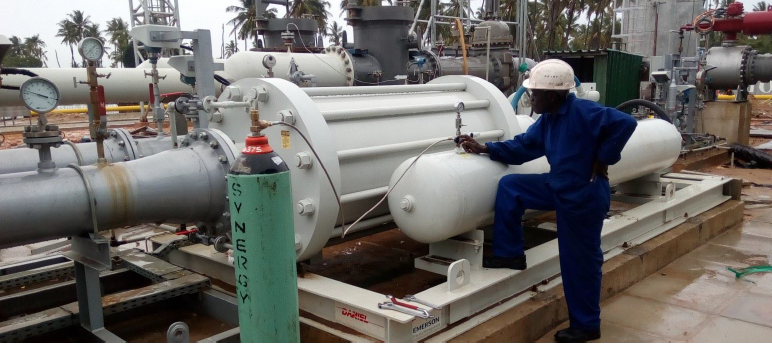
Overhaul & Calibration of Pressure Relief Valves
A PROPERLY DESIGNED, APPLIED, AND INSTALLED PRESSURE-RELIEVING DEVICE THAT IS MAINTAINED IN GOOD OPERATING CONDITION IS ESSENTIAL TO THE SAFETY OF PERSONNEL AND THE PROTECTION OF EQUIPMENT DURING ABNORMAL CIRCUMSTANCES.
NEED FOR INSPECTION
Pressure relieving devices should be treated as delicate instruments because their accurate functioning is critical to safe plant operation.
Failure of pressure-relieving devices to function properly when needed could result in the overpressure of the vessels, exchangers, boilers, or other equipment they were installed to protect.
OUR SOLUTIONS
BRIMBERG INSPECTION LIMITED carries out inspections, testing, maintenance and resetting of pressure relief devices to determine the general physical and operating conditions of the devices,and ensure that their performance meets the requirements for a given installation.
Calibration of Meters
Inaccurate measurement leaves oil and gas companies exposed to the risk of large financial losses whether at the exploration, production, or distribution stage.
With calibration of measurement instrumentation services from BRIMBERG INSPECTION LIMITED, you can be sure of the highest degree of measurement accuracy, reducing measurement uncertainties. Meter calibration enables you to avoid errors and mismeasurements. We assist you with certifying meter accuracy and the calibration of storage tanks
Why BRIMBERG INSPECTION LIMITED?
Our experts have many years of experience in the industry covering all types of meter and tanks calibration together with a wide range of international measurement reference standards.
Through our nationwide network, we can also offer you an extensive range of fixed pipe and mobile master prover rigs, volumetric calibration systems, which can be used on a wide variety of hydrocarbon products as well as calibration of tanks using the most advanced technology.
These are some of our valued services. Click below to see all services
See All Services
Our client
testimonials.
"BRIMBERG Inspection Limited's meticulous inspections have truly safeguarded our assets, ensuring uninterrupted operations and peace of mind."
Client
"Their dedication to regulatory compliance and safety standards is unparalleled, making them an invaluable partner in our journey towards excellence."
Client
"BRIMBERG Inspection Limited's innovative solutions have revolutionized our approach to risk management, paving the way for sustainable growth and success."
Client

Top-rated business
consultancy for your success
Links
Services
Legal